
Full ROV coverage of the seawater intake and outfall tunnels that keep a desalination plant running.
A South Australian desalination plant relies on seawater tunnels that carry water in from, and back out to, the sea. Neither can be reached on foot, and both stay flooded in normal service. In July 2022, AUS-ROV completed a general visual inspection of the plant's intake and outfall tunnels and their onshore and offshore structures, using our inspection-class ROV from both shore and vessel.
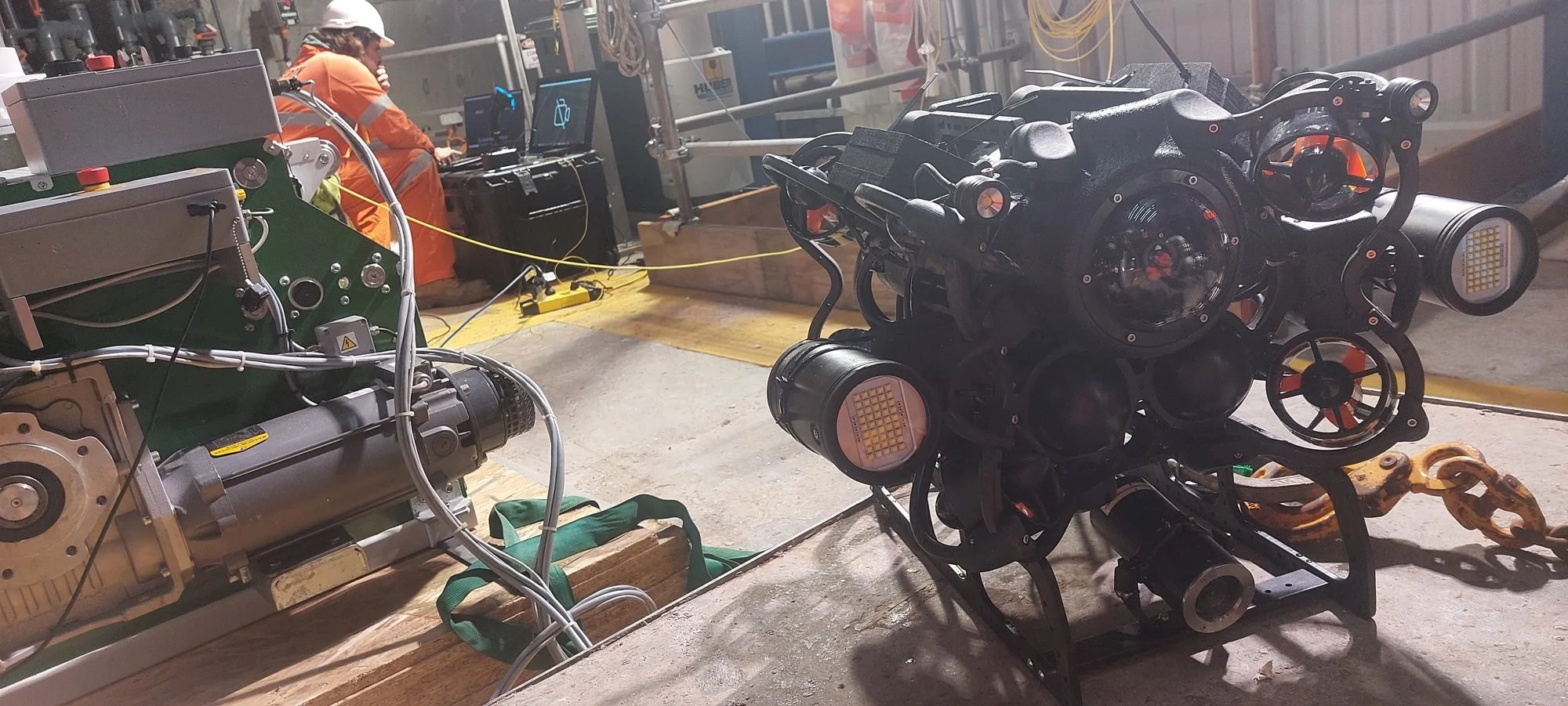
The Challenge
A desalination plant cannot simply switch off its seawater supply to let people inside. The intake tunnel, the offshore intake structure and the outfall tunnel are long, enclosed and fully submerged, and they sit in an environment where access for divers is limited, slow and carries real risk. Yet the operator needs a clear, current visual record of these assets so that it can plan maintenance with confidence.
The work also spanned two very different settings: deep onshore shafts leading into the tunnels, and an offshore structure that can only be reached from the water. One inspection programme had to cover both, in a way that gave the owner a single, consistent record.
Our Approach
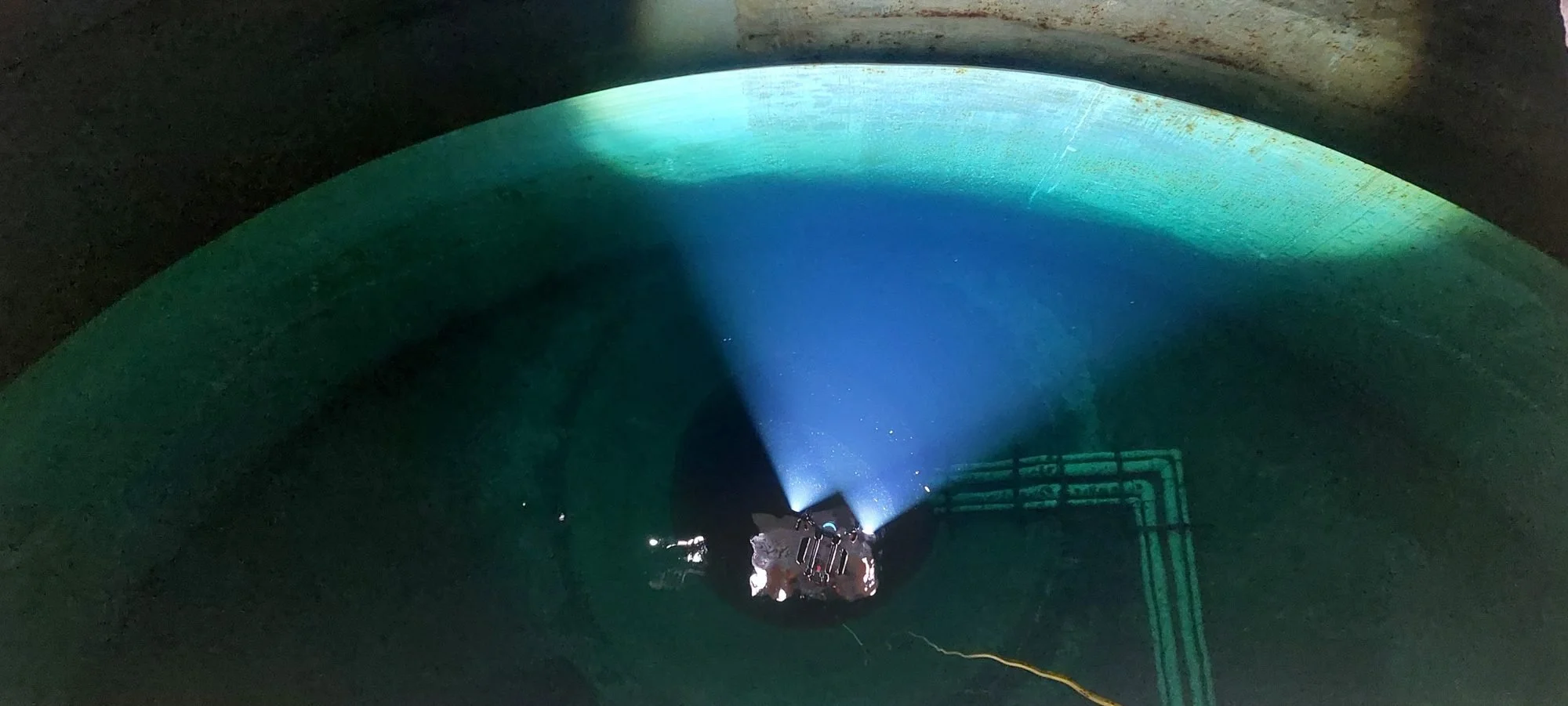
We deployed our ROV directly from the onshore intake and outfall shafts, travelling along each tunnel on a long tether while recording high-definition video throughout. This allowed the tunnels to be inspected end to end without anyone entering the water or the confined space.
For the offshore end of the system, we worked from a vessel provided by a local commercial diving contractor. The ROV was launched from the vessel, guided into the offshore intake structure, and then descended through the riser and into the tunnel. Using ROV and diver teams together is often the safest and most efficient way to cover a marine structure, with each doing what it does best.
Every location was recorded against a consistent set of conventions, so each part of the system can be found, compared and revisited in future inspections.
Safety shaped the whole job. Working from a shaft head, a vessel deck or a tunnel access point means careful planning around lifting, tether handling and communication between the ROV crew, the vessel team and the plant's own operators. Because the ROV does the work underwater, nobody had to enter a confined space or dive into the structures to get the footage.
Outcomes and Deliverables
Full coverage of the intake tunnel, the intake structures and the outfall tunnel was achieved across two days of fieldwork. The owner received:
High-definition inspection video of every inspected structure and tunnel.
Still images extracted for each recorded location.
A structured inspection report, reviewed and signed off by industry-recognised engineering professionals.
The report is designed to sit alongside the owner's existing asset records, so each inspection adds to a continuous picture of the system over time.
Why It Matters
Seawater intake and outfall systems are the lifelines of a desalination plant, and they are among the hardest assets to see. A regular, repeatable ROV inspection gives the operator evidence rather than assumptions, helps it plan maintenance where and when it is needed, and avoids the cost and disruption of taking the system out of service just to look inside. The same approach applies to power station cooling water tunnels, industrial seawater intakes, outfalls and diffusers across Australia and the Pacific.
Planning a similar inspection?
Our ROV tooling reaches places people cannot, and our reports are reviewed and signed off by industry-recognised engineering professionals. We have been operating since 2011. To discuss your intake, outfall or tunnel, get in touch:
inspections@aus-rov.com.au | 0412 291 870 | https://www.aus-rov.com.au/contact-us