
Hands-on work at depth
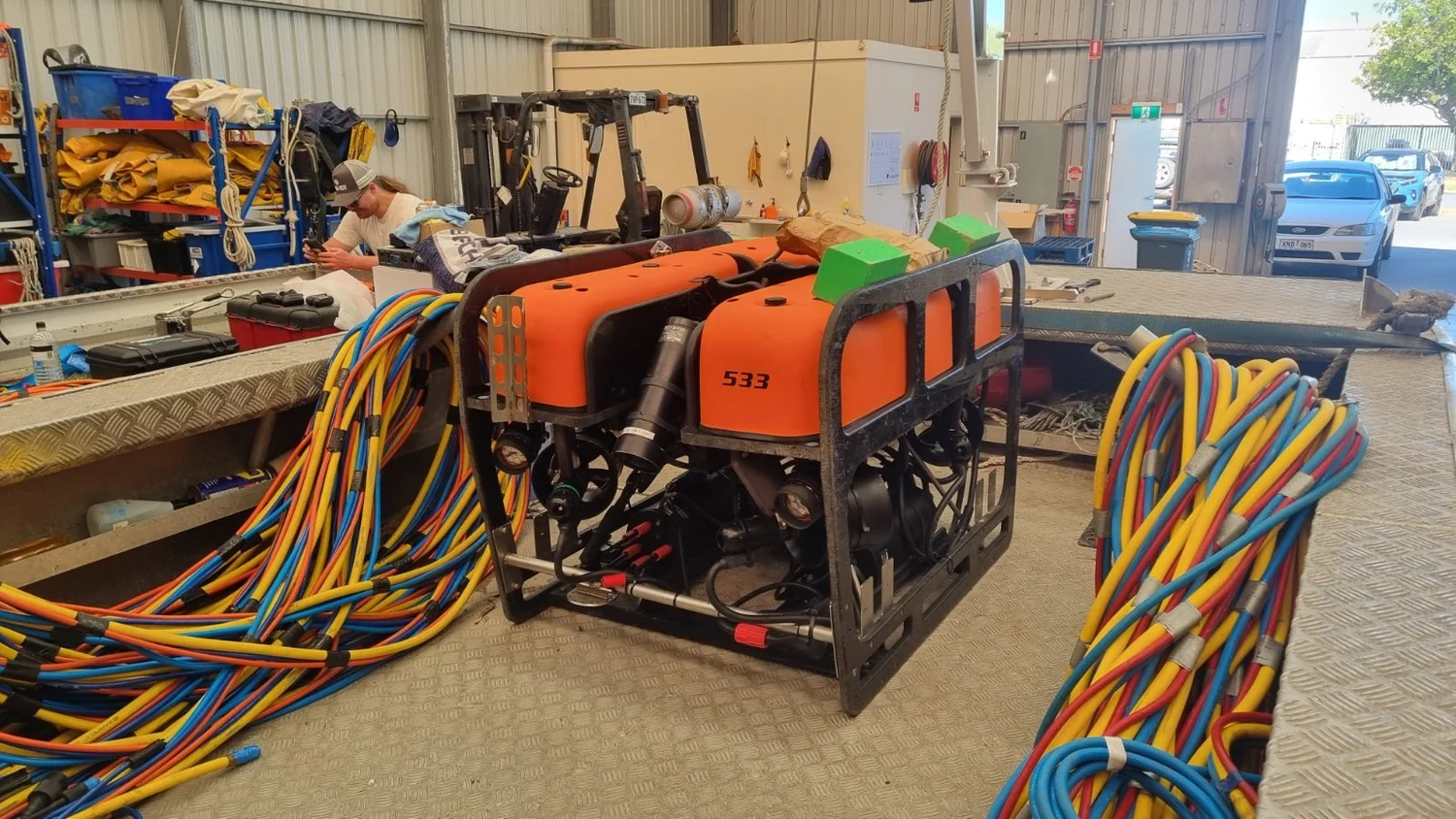
When an inspection finds a problem, the next job is often a small one: rig a lift, clean a fouled screen, recover a lost item or take a sample. Our ROVs carry the tools to do that light work underwater, without putting people in harm’s way.
The Practical Side of ROV Work
Light intervention is the hands-on side of ROV work: small, precise tasks carried out with compact manipulators, tooling and rigging, rather than with heavy hydraulic work-class systems.
It suits dams, intakes, tunnels, tanks, ports and coastal assets, where a compact ROV can get in, do the job and get out, often in the same mobilisation as the inspection that found the problem.
- Deployed from small vessels, wharves, dam crests and access shafts
- Every step carried out on live video, so your team sees the work happen
- Combined with inspection and survey to save a second mobilisation
What We Do Underwater
Four kinds of light work, each delivered with purpose-fitted tooling and a clear plan agreed before we get wet.
Rigging & Lifting at Depth
Attaching shackles, slings and lift lines to items on the bottom so they can be lifted safely from the surface. Rigging is set up and checked on camera before anything takes load.
- Shackles, slings and lift lines
- Lift points checked on live video
- Guide lines for cranes and divers
Water Blasting & Cleaning
Removing marine growth, sediment and biofilm from screens, trashracks, intakes, piles and structures, so they can be inspected properly or simply work again.
- Marine growth and biofilm removal
- Cleaned patches for close inspection and testing
- Sediment and debris clearing in tanks and intakes
Recovery & Debris Removal
Finding and recovering lost equipment, debris and failed components from dams, tunnels, tanks and the seabed, including places divers can’t safely reach.
- Lost tools, instruments and moorings
- Debris and failed liner from tunnels
- Search with sonar, recover with the ROV
Cutting, Sampling & UT
Light cutting of ropes, lines and fouling, collecting water, sediment and growth samples, and ultrasonic wall-thickness readings on steel structures.
- Rope, line and fouling cutting
- Water, sediment and biofilm samples
- Ultrasonic thickness (UT) readings
Planned on the Surface, Done at Depth
Scope & plan
We review drawings, past footage and access, then agree the task, tooling, lift plan and hold points with you.
Mobilise
A compact spread set up from a small vessel, wharf, dam crest or shaft, with minimal disruption to your site.
Do the work
Every task carried out on live video, with your team able to watch, question and approve each step.
Report
Before-and-after imagery, what was done or recovered, and clear recommendations for anything that still needs attention.
Recovering Failed Liner From a Flooded Seawater Tunnel
The challenge
Sections of a failed internal liner had come loose inside a flooded seawater tunnel. They had to be found and removed without sending divers into the tunnel.
Our approach
We located the loose sections with the ROV and recovered them back to the access shaft, where they were lifted out to the surface.
The result
The recovered liner was laid out on site for the client’s engineers to assess the failure, with no confined-space entry needed.
Sampling 1.8 km Inside an Intake Tunnel
The challenge
An operator needed physical samples of the biofilm growing inside a long seawater intake tunnel, around 1.8 km from the nearest access point.
Our approach
The ROV flew the tunnel to the agreed sample point and collected biofilm directly from the tunnel wall.
The result
Samples returned to the surface for laboratory analysis, giving the operator hard data to plan maintenance around.
Working Alongside Your Divers
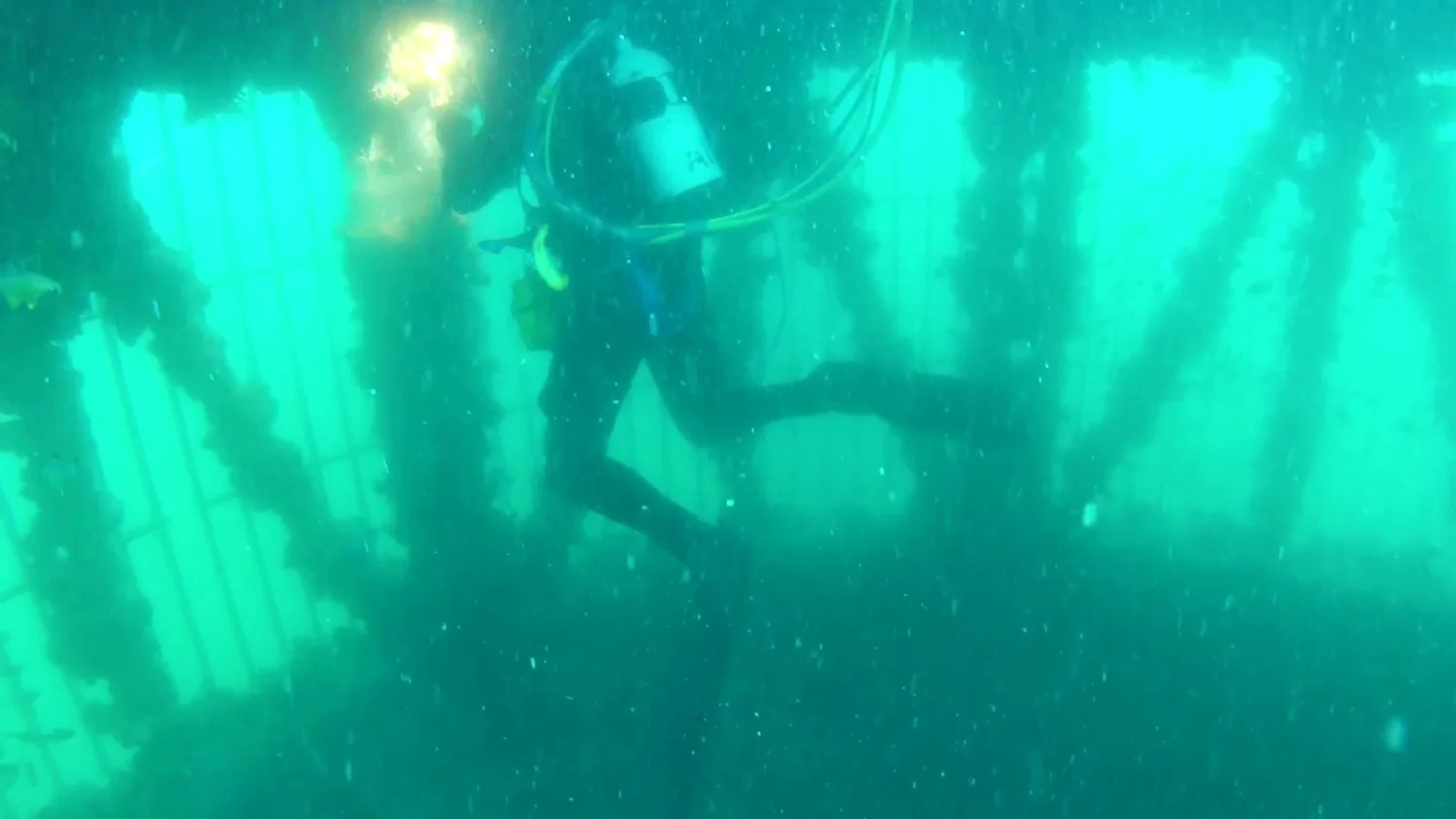
Some jobs need hands in the water. We regularly work with commercial diving teams, with the ROV providing overwatch, lighting and live video for the dive supervisor.
The ROV takes on the deep, long or higher-risk parts of the task, such as searching, pre-inspecting and checking rigging, so divers spend less time in the water and only where they are needed.
- Diver overwatch and live video to the surface
- ROV pre-inspection before divers go in
- Combined ROV and diver crews on one job
The Right Size for the Job
We are not an offshore oil and gas work-class ROV contractor. We don’t do heavy subsea construction, deepwater pipelay support or large hydraulic tooling work.
Our focus is light, practical intervention on infrastructure: dams, tunnels, intakes, tanks, ports and coastal assets. If your job needs a work-class system, we’ll tell you early and point you in the right direction.
Common Questions
What counts as light intervention?
Small, hands-on tasks done with a compact ROV and its tooling: rigging, cleaning, recovery, cutting, sampling and testing. Heavy subsea construction is a different class of work.
Can you inspect and fix in the same trip?
Yes. Most of our intervention work happens during an inspection. We find the problem, deal with what we can on the spot, and record the before and after on video.
How deep can you work?
Our ROV systems are depth-rated from 500 m to 1,000 m, well beyond most dams, tunnels, tanks and ports.
Do you work with divers?
Yes. We regularly work alongside commercial diving teams. The ROV provides overwatch, lighting and live video, and takes on the deep, long or high-risk parts of the task.
What if the job is too big for an ROV?
We will tell you at the scoping stage and recommend the right approach, whether that is a dive team, a larger contractor or a staged plan.
Got a Job Underwater That Needs Doing?
Tell us what needs rigging, cleaning, recovering or sampling. We’ll tell you straight whether an ROV is the right tool.